
Where Does Latex Come From?
When you hear “latex,” do you think of artificial or synthetic materials? The marketplace is filled with products created using man-made latex, so it’s no wonder lots of people are surprised to learn that true latex is a 100% natural substance derived from the rubber tree. Much in the way maple trees are tapped to retrieve sap for syrup, rubber trees are tapped to extract the milky fluid that is natural latex. In contrast, synthetic latex, a petrochemical polymer created to simulate the properties of organic latex, has its roots in the lab.
Sustainable and renewable, natural latex is a resource whose cultivation positively impacts the economic, social, and environmental life of a region. 85% of the world’s rubber trees are planted on small-scale farms directly managed by owner-operators. We get our latex from FSC-certified growers in India. FSC stands for “Forest Stewardship Council,” an international nonprofit established to ensure responsible, environmentally sound forest and supply-chain management.
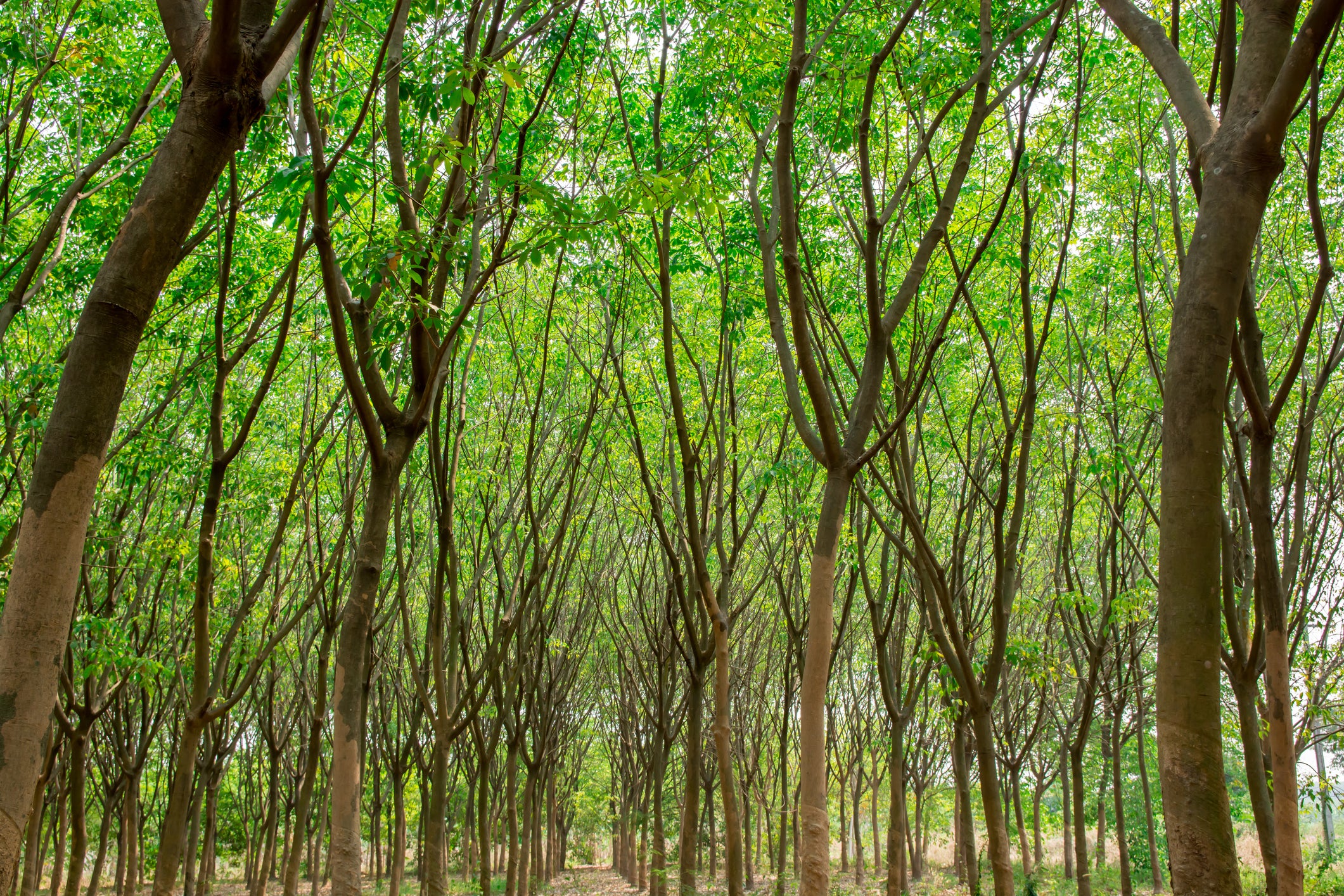
Getting the latex out of the tree is a straightforward and minimally invasive process. The fluid latex lies just beneath the surface of the tree bark. Skilled workers carefully etch a shallow incision to strip away a thin layer of bark and release the liquid into a waiting vessel. The rubber tree is a perennial which can produce latex for up to 25 years. Once “tapped out,” trees are harvested to become furniture or other goods.

Because it takes up to six years before trees are mature enough to produce latex, rubber tree growers practice “intercropping.” Smaller crops like pineapple, tea, or coffee are planted between the rows, keeping the land productive while waiting for the first latex harvest. This allows the farmers to diversify their income sources and keep workers employed. There are biological benefits too; companion crops encourage biodiversity of insects and soil organisms, keep erosion in check, and protect the tree base from cold weather damage.
At Holy Lamb Organics, we use Dunlop latex in our products. Dunlop refers to the process used to transform liquid latex into latex foam. Basically, the liquid is whipped, poured into a mold, and baked. No chemicals are involved at any phase of production, and the resulting foam remains 100% natural and biodegradable. Its open-cell structure makes it breathable and temperature regulating. Dense but springy, and extremely durable, Dunlop latex foam provides the ideal supportive core for pillows, mattresses, and toppers. Your eco-friendly bedding will last for years, and you can rest easy knowing it was produced sustainably from start to finish.
Leave a comment
Comments will be approved before showing up.
Also in Blog

What Sustainability Really Means in the Bedding Industry
In the bedding industry, sustainability is a word that’s used often, but not always clearly defined. Understanding what it truly means can help consumers make more informed, thoughtful decisions that support both personal well-being and environmental responsibility.


A Mother’s Day Gift That Lasts: The Comfort of Better Sleep
Mother’s Day is often filled with gestures of appreciation, but the most meaningful gifts are the ones that continue to give long after the day has passed.


Sleep Awareness Month: What Science Says About Sleep and Your Health
Every March, National Sleep Awareness Month invites us to deepen our understanding of sleep. Let’s explore evidence-based sleep facts, why they matter, and how tuning into sleep health can enhance your life in both subtle and powerful ways.