
Finding Your Perfect Sheets for Year-Round Comfort
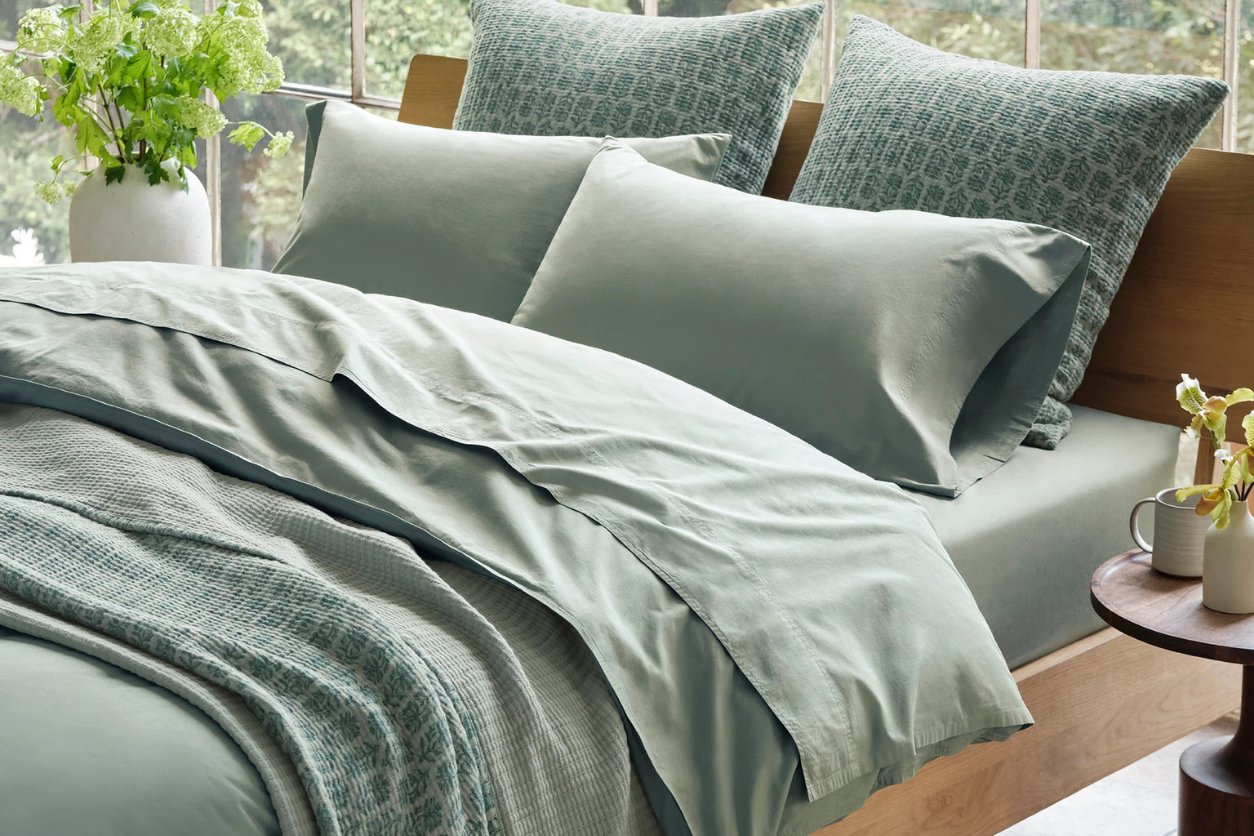

Picking sheets sounds simple until you're standing in front of four fabric options wondering what actually separates them. Percale, sateen, linen, flannel... they're not just different textures, they behave differently on your body overnight.
The right pick depends less on thread count and more on how warm you sleep, what season it is, and how your bedroom holds temperature.
Here's a breakdown of the four major sheet types and where each one shines.
Percale: Crisp, Cool, and Breathable

Percale is a plain weave where threads alternate over and under each other in a tight, balanced pattern. That construction gives it a matte finish and a crisp, smooth feel, often compared to good hotel sheets.
The tight-but-balanced weave allows more airflow around the body, which is why percale is the go-to for people who run warm overnight. It's the fabric equivalent of a well-pressed cotton shirt: light, structured, and cool to the touch.
Best for:
- Hot sleepers or anyone who wakes up overheated
- Summer months and warmer climates
- Bedrooms that trap heat or lack strong air conditioning
If you tend to kick off the covers by 2 a.m., percale is likely your best match.
Sateen: Silky, Warm, and Lustrous

Sateen uses a different weave structure where more threads pass over than under, creating that smooth, slightly glossy surface sateen is known for. The result is a heavier, silkier feel with a subtle sheen, but with less airflow than percale.
Because the weave is denser, sateen tends to retain a bit more warmth. It's the "wrap yourself up" fabric that feels soft against the skin, with a drape that's more luxurious than crisp.
Best for:
- Sleepers who run cold or like a warmer, cozier bed
- Cooler months (fall through early spring) in temperate homes
- Bedrooms that stay comfortably cool year-round, where the sheet itself supplies the warmth
One trade-off worth knowing: sateen's denser weave can be more prone to pilling over time compared to percale or linen.
Linen: Textured, Temperature-Regulating, All-Season

Linen, made from flax fibers, is in a category of its own. It has a naturally looser, textured weave that gives it that relaxed, lived-in look. That same open weave makes it highly breathable in summer while still trapping enough air to feel insulating in winter.
Linen is also famously durable and gets softer with every wash, making it a long-term investment rather than a seasonal purchase.
Best for:
- People who want one set of sheets that works across all four seasons
- Homes with fluctuating temperatures (no central climate control, older houses, variable weather)
- Sleepers who like texture and a relaxed, slightly rumpled aesthetic over a smooth, ironed one
Think of linen as the sheet that adapts to the room rather than asking the room to adapt to it.
Flannel: Brushed, Cozy, and Built for Cold

Flannel is cotton that's been brushed on one or both sides, raising tiny fibers that trap air and create insulation. That brushing is what gives flannel its signature soft, fuzzy texture, and its reputation as the warmest option on this list.
Best for:
- Cold sleepers and anyone in a chilly climate
- Deep winter months
- Drafty bedrooms, older homes, or anywhere the heat doesn't quite reach the bed
Flannel is less about breathability and more about heat retention, so it's usually the one sheet type worth swapping in seasonally rather than using year-round.
Quick Reference
| Fabric | Feel | Best Season | Best For |
|---|---|---|---|
| Percale | Crisp, matte, cool | Summer / warm climates | Hot sleepers |
| Sateen | Smooth, silky, warmer | Fall–Spring | Cold sleepers, luxurious feel |
| Linen | Textured, breathable, insulating | All seasons | Fluctuating temps, low-maintenance |
| Flannel | Soft, brushed, heat-trapping | Winter | Cold climates, cozy feel, drafty rooms |
The Bottom Line
There's no universally "best" sheet, only the best sheet for your body and your bedroom. If you run hot, start with percale or linen. If you run cold, sateen or flannel will serve you better. And if you'd rather not think about swapping sheets with the seasons at all, linen is built to keep up no matter what the thermostat says.
Leave a comment
Comments will be approved before showing up.
Also in Blog
Cozy Up for Fall: Preparing Your Home and Bedding for Cooler Nights
As the days grow shorter and the evenings cooler, it’s the perfect time to think about creating warmth and comfort in your home. Small changes in your environment and bedding can make a big difference in how comfortable you feel as the seasons change.


Sleep Anywhere This Summer: Travel Better, Rest Deeper
Travel season is officially here. Road trips, campsites, guest rooms, late nights, early mornings. While adventure fuels the spirit, it can quietly steal our sleep if we’re not prepared... But sleeping well on the go doesn’t have to be a compromise.


Built to Last: A Mattress for Father’s Day
A mattress is one of the most long-term choices we make for our bodies. It supports us through years of nights, seasons of change, and countless mornings. Yet it’s often treated as disposable, replaced with easy, cheap options that will break down quickly rather than a well-chosen mattress that will hold up over time.